
DermaSafe SCT™
In chemico skin corrosion test. GHS 1A / 1B+1C / Not Corrosive classification and DOT packing group assignment. No animal tissue, no cell culture.
Kit types
Quantitative
LabPlate reader · 3 test articles per kit · Lab setting
Field Test
FieldVisual readout · 1 test article per kit · On-site use

Ultra-High-Throughput
Coming SoonPlate reader · 30 test articles per kit · Semi-automated
3
GHS categories
<6 h
Time to result
None
Animal tissue
DOT
Packing group
DermaSafe SCT™ Kits
Click Full kit details on any row to expand protocol steps, materials list, and downloadable documents.
 In Chemico Skin Corrosion
DermaSafe SCT™ High-Throughput
SKU DSHT2903
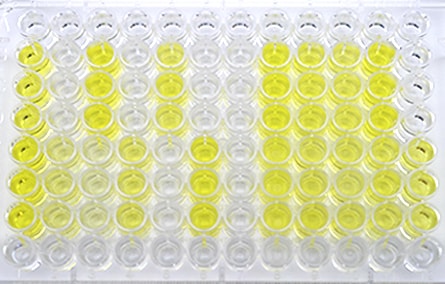
High-throughput assay designed for laboratory plate reader measurement. Batch testing of multiple samples with quantitative optical density readout. GHS Corrosive classification and DOT packing group assignment.
per kit (3 test articles)
Ships within 5–7 business days
 In Chemico Skin Corrosion
DermaSafe SCT™ Field Test
SKU DSFT2489
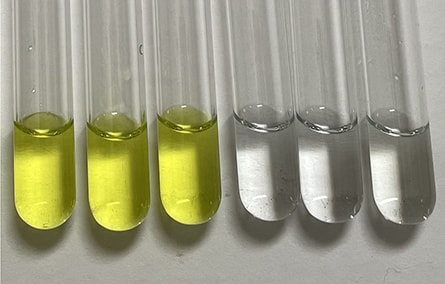
Field method variant designed for visual colorimetric readout without a plate reader. Suitable for on-site, resource-limited, or field testing environments.
per kit (1 test article)
Contact us for availability and lead time
Volume discounts available · Contact us
How DermaSafe SCT™ works
The DermaSafe SCT™ is an in chemico skin corrosion test that classifies test materials into GHS skin corrosion categories, Category 1A (severe corrosive), Category 1B+1C (corrosive), and Not Corrosive, and assigns DOT packing groups (I and II/III) for transport classification.
The method is based on the principle that skin corrosives interact with and degrade the structural proteins and biochemical components of the skin barrier. The DermaSafe matrix mimics the biochemical environment of the stratum corneum and dermis. When a corrosive test material is added, it causes a measurable change in optical density (High-Throughput) or a visible color change (Field Test) that correlates with the material's corrosion potential.
Unlike the OECD TG 431 reconstructed human epidermis (RhE) method, DermaSafe requires no live tissue, no cell culture, and no specialized laboratory infrastructure. It is shelf-stable and can be run at room temperature.
Application domains
Classification outcomes
GHS Category 1A · DOT Packing Group I
Severe corrosive — irreversible skin damage in ≤3 min
GHS Category 1B+1C · DOT Packing Group II/III
Corrosive — irreversible skin damage in ≤4 hours
Not Corrosive · Not a DOT corrosive
No irreversible skin damage
High-Throughput vs. Field Test
High-Throughput
- Plate reader required
- 3 test articles per kit
- Quantitative OD readout
- Laboratory batch testing
Field Test
- No plate reader needed
- 1 test article per kit
- Visual colorimetric readout
- On-site / field use
Regulatory basis for use
OECD Guidance Document No. 255 (2022) on IATA supports use of in chemico data as a standalone tier when mechanistic plausibility is established.
US DOT 49 CFR §173.137(c)(3) allows alternative test methods for packing group assignment when the competent authority accepts the data as equivalent.
DermaSafe SCT™ measures a scientifically validated biochemical marker of skin damage, quantifying the degradation of a defined dermal matrix component by corrosive agents. This marker-based approach is a novel dimension in skin corrosion testing: it provides direct mechanistic evidence of corrosive activity at the molecular level, distinct from cell viability endpoints used in RhE methods, and adds an independent line of evidence for WoE analysis under GHS §A1.4.2 and OECD GD 255.
OSHA HCS 2012/2024 (29 CFR §1910.1200) permits classification based on all available data including non-OECD-validated methods under WoE.
Peer-reviewed publication and independent validation data constitute the scientific justification required by GHS §A1.4.2 and OECD GD 255 for WoE classification decisions.
The Future of the DermaSafe Technology
The enzyme-activity reduction platform underlying DermaSafe SCT™ is not limited to skin. The granted patent covers a broadly applicable in chemico method with disclosed applicability across nine human tissue types — from ocular and pulmonary to hepatic, neurological, and cardiac toxicity.
9
Tissue types
30
Chemicals / run
<6 h
Full panel
Need contract testing?
LebrunLabs.co offers contract testing using DermaSafe SCT™ and other InChemico methods.